
Surfing is more than just a sport—it’s a feeling of freedom, connection with the ocean, and pure joy. If you’ve always dreamed of standing on a wave, the good news is that anyone can learn to surf with the right guidance, safe conditions, and a little patience.
This beginner’s guide will walk you through the essentials so you can start your surfing journey with confidence and excitement.
Is Surfing Hard to Learn?
Surfing can look difficult from the beach, but beginners often make progress faster than they expect. With calm waves, proper instruction, and the right board, many first-time surfers are able to stand up during their very first lesson.
Like any new skill, improvement comes step by step. Balance, timing, and confidence all grow naturally with practice.
Choosing the Right Place to Learn
The location of your first surf experience makes a huge difference. Ideal beginner spots offer:
- Soft, sandy beaches instead of rocks
- Small, gentle waves that break slowly
- Warm weather and safe water conditions
- Professional instructors and quality equipment
Places like Morocco’s Atlantic coast—especially Tamraght and nearby beaches—are known for being perfect for beginner surfers thanks to their friendly waves and relaxed atmosphere.
The Best Surfboard for Beginners
Most beginners start with a soft-top foam surfboard. These boards are longer, wider, and more stable, which makes balancing and catching waves much easier.
A bigger board might feel slow at first, but it helps you learn faster and stay safe in the water.
Basic Surfing Steps
Your first surf lesson usually follows a simple progression:
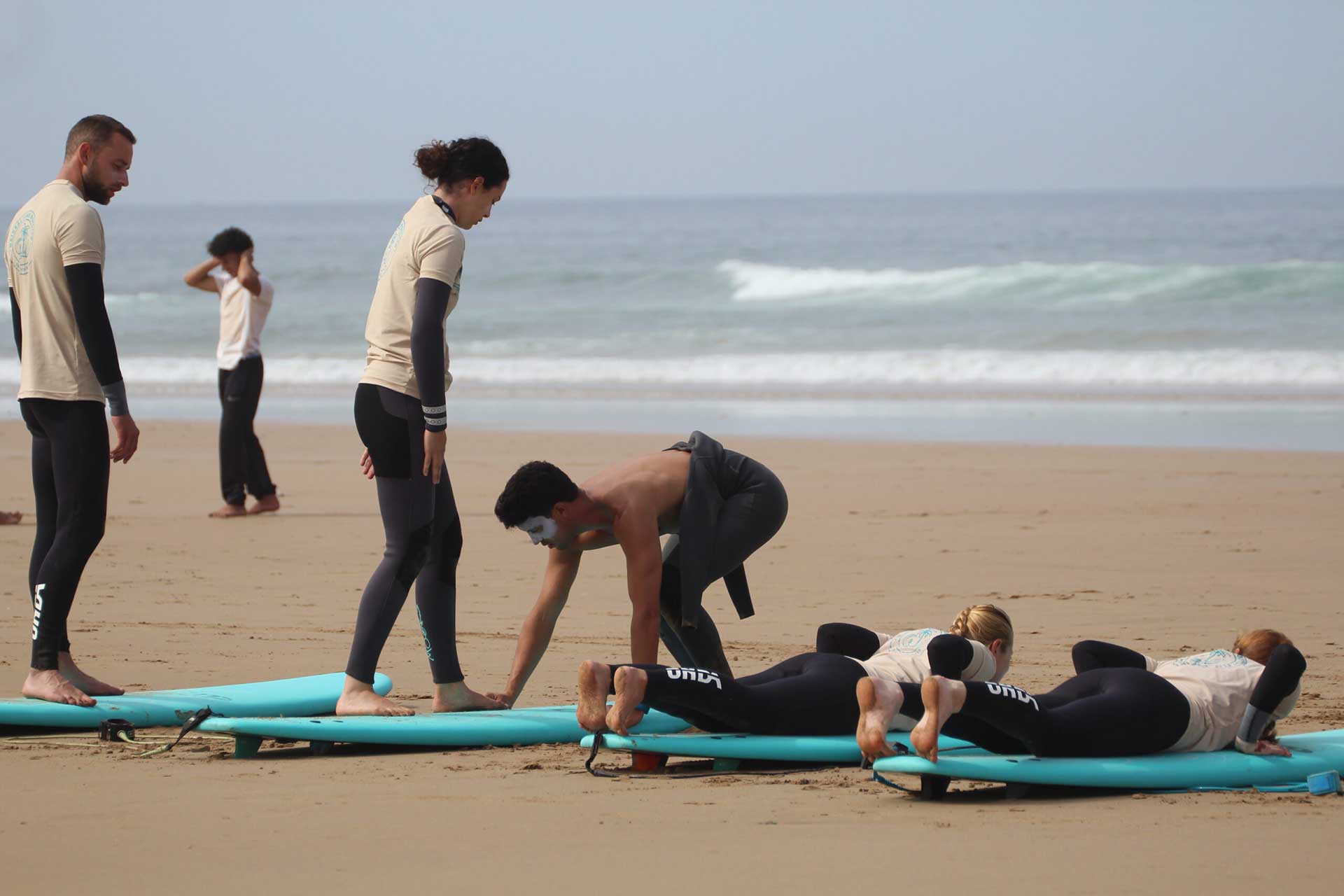
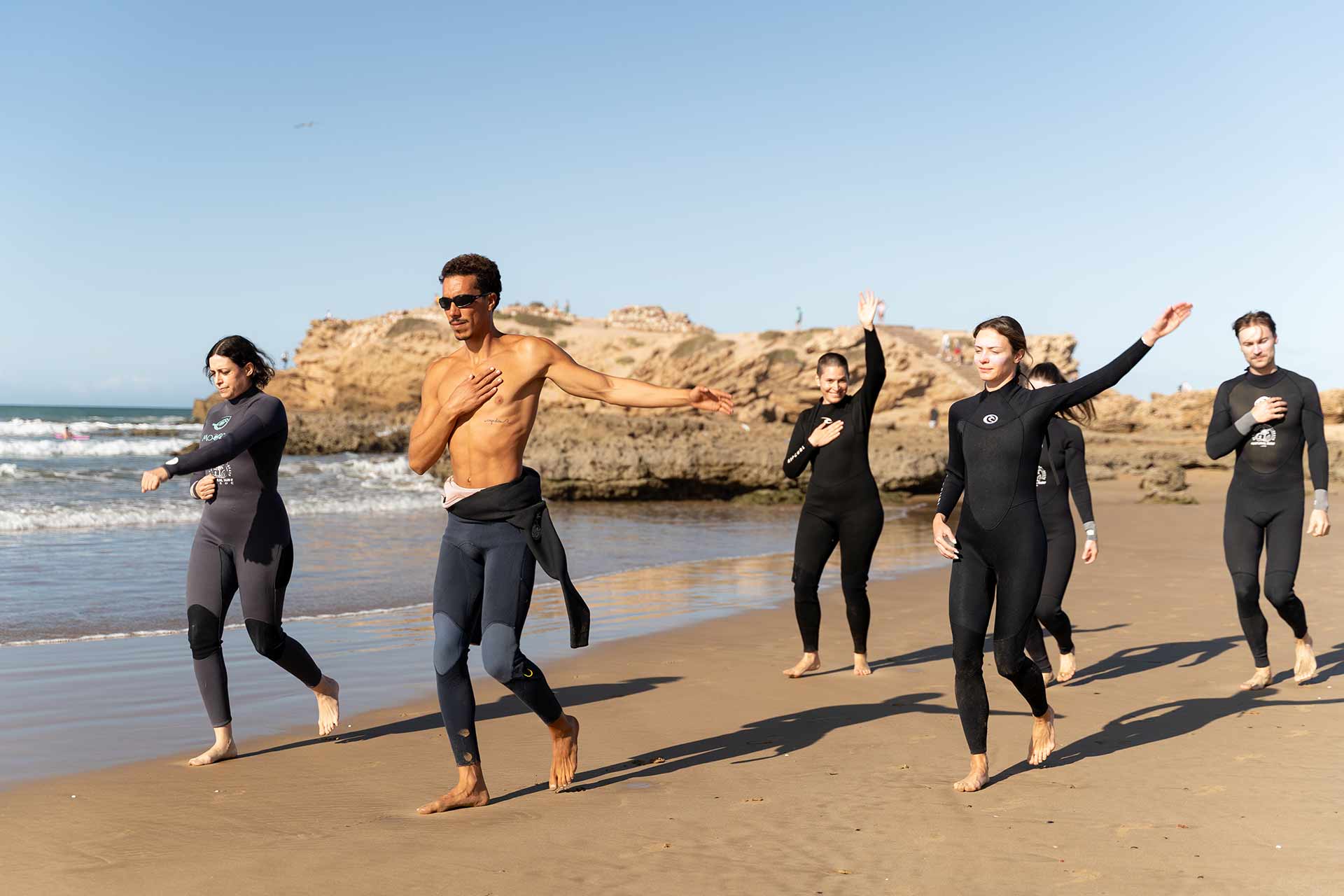
- Beach training: Learning how to position yourself and practice the “pop-up” movement on the sand.
- Paddling: Entering the water and practicing balance on the board.
- Catching whitewater waves: Small broken waves that gently push you toward shore.
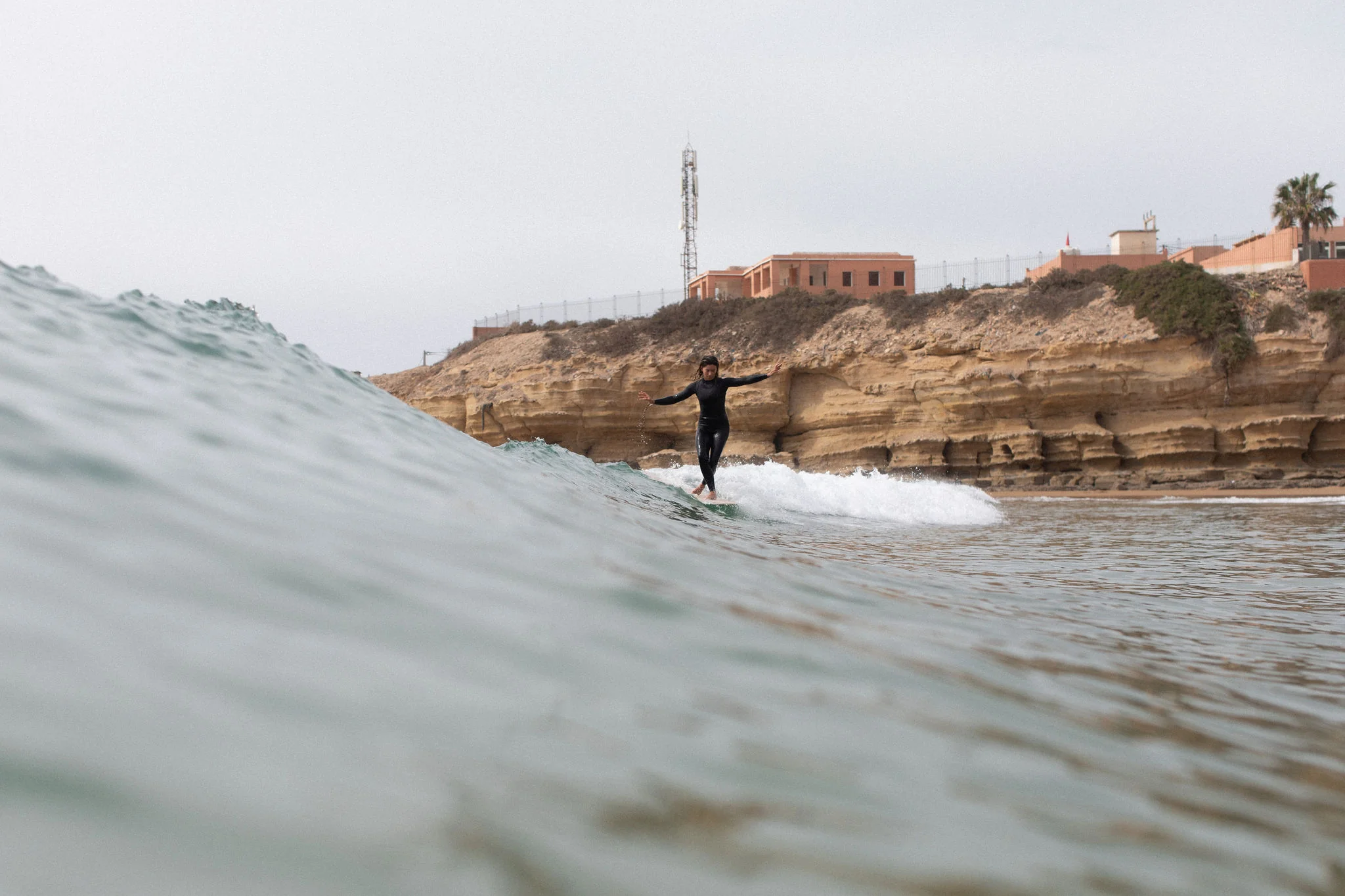
- Standing up: Finding your balance and riding your first wave.
Every small success builds confidence and brings you closer to smooth, controlled rides.
Safety Tips for First-Time Surfers
Surfing is safe when you respect the ocean and follow simple rules:
- Always listen to your instructor or guide
- Start in beginner-friendly conditions
- Never surf alone as a beginner
- Protect your skin with sunscreen and a rash guard
- Stay calm and relaxed in the water
Confidence in the ocean grows quickly when you feel safe and supported.
How Long Does It Take to Improve?
Most beginners can stand on the board within a few days of practice. Real progress—like turning, paddling confidently, and catching unbroken waves—usually happens over one to two weeks of regular surfing.
The key is consistency, patience, and enjoying the process instead of rushing it.
Why Learning to Surf Is So Special
Surfing is not only physical—it’s deeply emotional and calming. Time in the ocean reduces stress, improves balance, and connects you with nature in a powerful way.
Many people begin surfing as a holiday activity and discover a lifelong passion that changes how they travel, relax, and experience the world.
Ready for Your First Wave?
Starting something new always feels exciting, and surfing is one of the most rewarding journeys you can take. With friendly waves, supportive coaching, and the beauty of the ocean around you, your first surf experience can become an unforgettable memory.
Your surfing story begins the moment you step into the water—one wave at a time.
0 Comments